
At an aggressive starting price of 18.79 lakh, the Tata Sierra.ev has a real-world range of 510 to 530 km with the 75 kWh battery pack on a single charge while the smaller 63 kWh battery coughs out a real-world range of 440 to 460 km, plus lifetime battery warranty as standard. And with the intelligent Quad-Wheel Drive system pushing out 504 Nm of torque, the EV flies from 0 to 100 km/h in just 5.8 seconds, says Rajesh Karkera.

Mountain drives are the ultimate test of an EV's stamina. Here is how the Sierra.ev fared over a rigorous test loop in the Nilgiris, says Rajesh Karkera/Rediff.com.
First Drive: Why the New Tata Sierra Was Born to be an EV

While this is a thoroughly modern SUV, the soul of the original '90s icon lingers.
Tata Motors expands its market leadership in India's electric passenger vehicle (ePV) segment, capturing 39 per cent of the market in Q1FY27, while simultaneously strengthening its position as the nation's second-largest carmaker amidst fierce competition and rapid market growth.

As the Tata Sierra makes a triumphant return as a modern monocoque 5-doorOn November 15, Rajesh Karkera recalls the original SUV that defined his early adulthood.

Tata Motors Passenger Vehicles is gearing up for the next phase of electric vehicle adoption in India, targeting over 30% EV penetration by FY31. The company plans to launch four new products and over ten refreshes by FY31, expanding its portfolio to ten EV nameplates. This strategy aims to move beyond early adopters to engage the early and late majority consumers, focusing on enhanced range, faster charging, and improved battery technology.

The Curvv hasn't set the sales charts on fire and Tata needs another product aimed straight at the Hyundai Creta, which is where the Sierra fits in.

LIC is the only brand in the Brand Finance India 100 2026 report that has a top five rank in both brand value and brand strength.
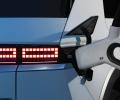
India may see its busiest EV festive season in 2025 with SUVs, luxury cars and scooters set to launch, but rare-earth supply bottlenecks risk delaying rollouts.

India's domestic passenger vehicle sales experienced a robust 24.6 per cent year-on-year increase in June, propelled by favourable government policies like income tax relief and repo rate cuts, alongside resilient rural demand, even as global crude oil prices pose potential cost pressures.

Tata Motors emerged as the biggest gainer in the passenger vehicles (PV) market in the second half of FY25, following a GST rate cut in September, achieving the highest growth among major OEMs and overtaking Mahindra & Mahindra in volumes.
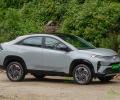
As battery prices drop, early customers of Tata Motors, which was the first mover in the passenger EV market, could feel let down.

'The reported deal between the European Union and China should mitigate it (shortage) for the medium to long term. Let's wait and watch how this plays out.'

Tata Motors Passenger Vehicles (TMPV) on Friday reported a 13 per cent year-on-year (Y-o-Y) decline in consolidated revenue from operations for the second quarter of 2025-26 (Q2FY26), largely due to the cyberattack on its subsidiary Jaguar Land Rover (JLR) in late August that forced a shutdown of its manufacturing operations for over five weeks.

Maruti Suzuki, Tata Motors, Mahindra & Mahindra, Hyundai and MG Motors are gearing up to introduce EVs in India.

With nearly 100 launches and unveils, the Bharat Mobility Global Expo 2025, held in Delhi from January 17 to 22, made one thing clear to automobile enthusiasts: Electric vehicles (EVs) are the way ahead for the Indian auto market for years to come.

Automotive (auto) major Tata Motors posted a 51 per cent drop in consolidated net profit for the January-March quarter (Q4) of 2024-25 (FY25), to Rs 8,470 crore, due to a deferred tax asset of almost Rs 9,000 crore in the corresponding quarter of the previous financial year and an exceptional item of Rs 566 crore during the quarter. Revenue was up just 0.5 per cent year-on-year (Y-o-Y) at Rs 1.18 trillion for Q4FY25.

Why is Shailesh Chandra, managing director of Tata Motors Passenger Vehicles and Tata Passenger Electric Mobility, not worried about the competition?

Among the cars unveiled at the Auto Expo on Wednesday was Mahindra and Mahindra's e-KUV for Rs 8.2 lakhs ex-showroom Delhi. With a single charge range of 150 km and a 55 min fast charging upto 80 pc, it was both a head-turner and a conversation-starter.

Almost all of these companies either unveiled their new electric vehicle or alternative energy-powered models.
Automobile giant Tata Motors' shares were in demand on Wednesday as the stock rallied as much as 3.69 per cent to hit an intraday high of Rs 671.80 per share, before settling 3.18 per cent higher at Rs 668.45. By comparison, the BSE Sensex settled 0.10 per cent, or 72.56 points, lower at 74,029.76.

Notwithstanding robust volume growth and a strong performance from Jaguar Land Rover (JLR), Tata Motors, the country's second-largest automobile (auto) manufacturer by market capitalisation, disappointed the Street with its January-March quarter (Q4) results for 2023-24 (FY24). While consolidated revenues saw a 13 per cent increase, lower-than-expected realisations in the Indian operations weighed down overall performance.

'SUV is a very intensely fought category, unlike hatchbacks and cars.'

The number of participating automakers has fallen from 50 in 2018 to 30 this year. The count of exhibitors, including technology companies, has come down from 119 to 112. And showstopper luxury and supercar brands, including Toyota, Jeep, Lamborghini, Porsche, and Volvo will be missing. Similarly, the commercial vehicle makers also gave the show a miss -- a prolonged economic slowdown has dented their fortunes and near chances of any recovery.

India's flagship motor show Auto Expo 2023 kicked off on Wednesday with the global unveiling of Suzuki Motor Corporation's concept electric SUV 'eVX' which is slated to hit the market by 2025. The company's Indian arm Maruti Suzuki India is among the major manufacturers participating in the show that has returned after three years. The Concept eVX is a mid-size electric SUV concept designed and developed by Suzuki Motor Corporation (SMC), Japan. It will be powered by a 60 kWh battery pack offering up to 550 km of driving range on single charge.
